BLOG
Understanding Australian Standards for Building Inspections and How They Apply to Residential Properties in Queensland
What AS 4349.1 Requires Inspectors to Assess
AS 4349.1 establishes that inspections are visual and non-invasive. Inspectors are required to examine the accessible areas of the building, including the roof exterior, roof void, subfloor where available, internal rooms, and external structures within the defined property boundary.
The standard focuses on identifying major defects, minor defects, and conditions that may lead to future problems. In practical terms, this includes structural movement, moisture ingress, timber deterioration, and safety hazards that are visible at the time of inspection.
In North Brisbane properties, this often involves assessing slab performance in newer homes, subfloor conditions in raised timber structures, and corrosion risks in coastal suburbs. The standard ensures these observations are recorded in a consistent and structured manner.
Defining Major and Minor Defects
A key part of AS 4349.1 is the classification of defects. This helps readers of the report understand the relative significance of each issue.
A major defect is typically one that requires rectification to avoid unsafe conditions or significant further damage. Examples may include substantial cracking linked to foundation movement, active water ingress affecting structural elements, or severe timber deterioration.
Minor defects are issues that do not currently impact structural performance but may require maintenance. These can include small cracks, worn finishes, or early signs of material ageing.
Limitations Defined by the Standard
AS 4349.1 clearly outlines what is not included in a standard building inspection. Inspectors do not move furniture, remove floor coverings, open wall cavities, or dismantle building components. Areas that are inaccessible or obstructed are excluded from assessment.
The standard also excludes specialist systems such as electrical wiring, gas installations, air conditioning, and fire safety systems unless specifically arranged under separate inspections.
For buyers in Queensland, this means that a building inspection provides a broad assessment of the structure and visible condition, but it does not replace the need for additional specialist advice where required.
Reporting Requirements and Documentation
Inspection reports prepared under AS 4349.1 must be clear, objective, and supported by evidence. The standard requires that defects are described in a way that allows the reader to understand their nature and location within the property.
Photographs are commonly included to support written observations, particularly for areas such as roof spaces, subfloors, and external defects. The report must also note any limitations encountered during the inspection, such as restricted access or weather conditions that may have affected visibility.
In North Brisbane, where properties can vary widely in age and construction type, clear documentation helps ensure that findings are interpreted correctly in context.
Relationship to Timber Pest Inspections
While AS 4349.1 covers building inspections, timber pest inspections are governed by a separate standard, AS 4349.3. This distinction is important in Queensland, where termite activity is a known risk.
A building inspection alone does not include a detailed assessment for termites or other timber pests. Where there is any indication of risk or where the property type suggests increased exposure, a separate timber pest inspection is typically arranged alongside the building inspection.
This combined approach is common in North Brisbane due to the prevalence of timber construction and environmental conditions that support termite activity.
How the Standards Apply in Practice
The Australian Standards provide a baseline for consistency, but their application still depends on the specific property being inspected. Factors such as building age, design, location, and maintenance history all influence what is observed during an inspection.
In coastal parts of North Brisbane, inspectors may pay closer attention to corrosion and moisture-related issues, while in inland suburbs, soil movement and drainage may be more prominent considerations.
Understanding how AS 4349.1 applies helps property owners and buyers interpret inspection reports more effectively. It clarifies what has been assessed, what has not been included, and how findings should be viewed in relation to the property’s overall condition.
DISCOVER WHAT OUR CUSTOMERS HAVE TO SAY ABOUT US
REVIEWS
REVIEW US ON GOOGLE
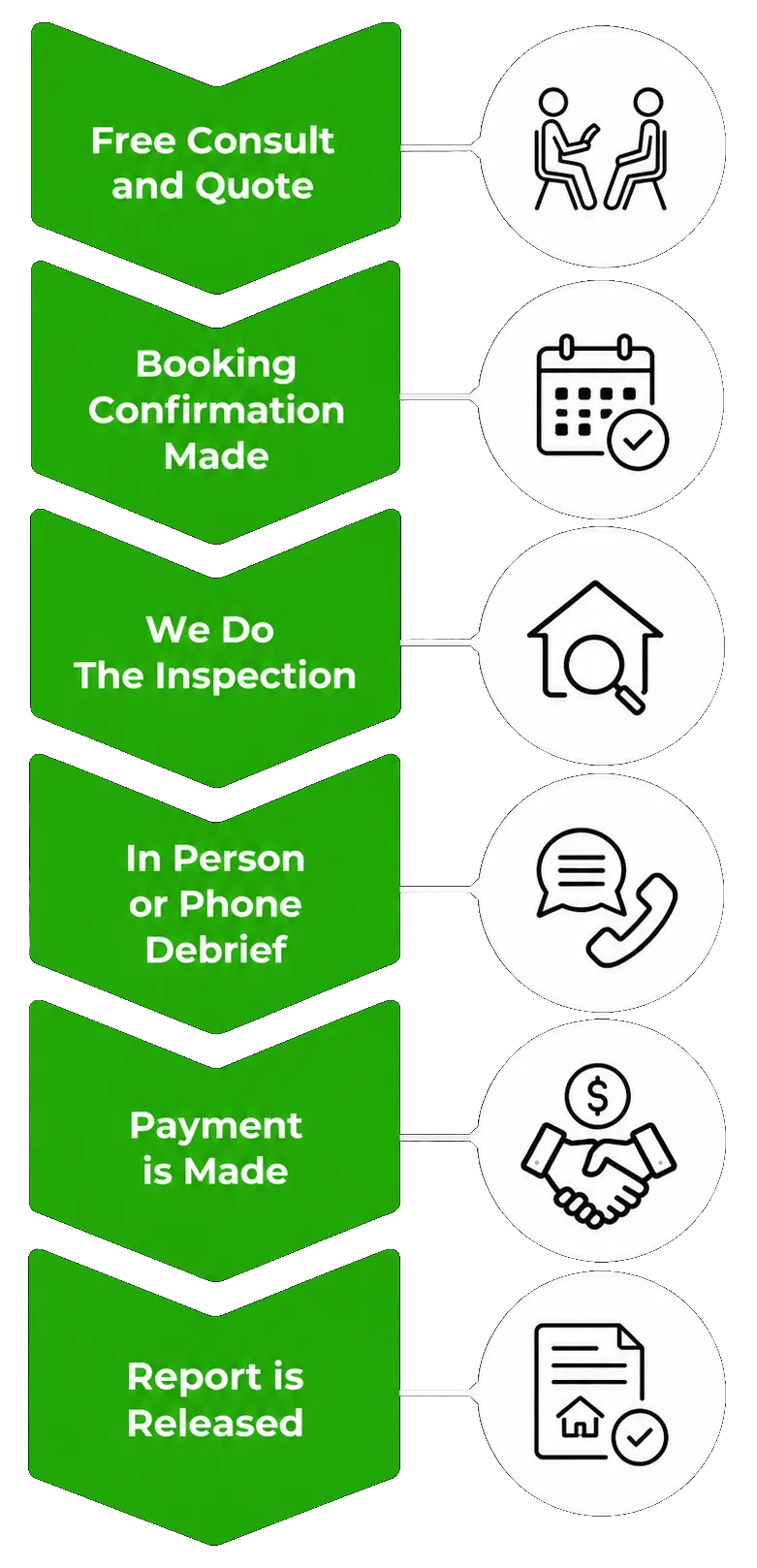
our process
Our process is simple and only contains a few simple steps

READY TO take the next step?
get a free quote TODAY!
North Brisbane Property Inspections
0486 341 617