
SERVICES
Builder Warranty Inspection
A documented assessment of visible residential building defects before relevant complaint or warranty deadlines pass.
What Is a Builder Warranty Inspection?
A builder warranty inspection reviews completed residential work for visible defects that may require the contractor’s attention. Owners commonly arrange one after moving into a new home, before a contractual defect period ends, or when cracking, leaks, poor finishes or incomplete work become apparent. The inspector assesses observable work and considers available plans, specifications and other construction documents supplied by the owner. The report records the location and nature of each item so the owner can notify the contractor in writing. Queensland warranty and complaint processes contain strict timeframes, and structural and non-structural matters may follow different rules. Owners should obtain current guidance from the QBCC and seek legal advice where required. The inspection does not decide a legal dispute, certify compliance or force a builder to complete repairs. It gives North Brisbane property owners an independent record of visible conditions and a structured defect list for discussions with the contractor and relevant specialists.
Why Choose North Brisbane Property Inspections for Builder Warranty Inspection
Defects Recorded for Written Notification
A warranty concern needs more than a general complaint. The report identifies each observed item and its location so owners can communicate clearly with the contractor. Photographic reporting provides a dated record of visible conditions and helps distinguish individual defects when several parts of the home require inspection, discussion or repair.
Attention to New-Build Performance
The inspection considers cracking, moisture entry, drainage, roofing details, wet areas, doors, windows, finishes and incomplete work within the context of a recently completed home. It focuses on observable performance concerns rather than treating every cosmetic variation as a structural defect or assuming every concern has the same significance.
Relevant Timeframes Kept in View
Queensland complaint and warranty processes may apply different deadlines to structural and non-structural defects. Prompt reporting gives owners time to seek current QBCC or legal guidance without unnecessary delay. The inspector documents visible conditions but does not provide legal advice or determine whether a warranty or insurance claim will succeed.
Independent Building Perspective
More than 30 years of experience across construction, housing maintenance and asset management supports the practical review of completed work. The inspection remains independent from the original builder and does not quote for rectification. Owners receive a condition record they can use when communicating with the contractor and relevant specialists.
What Builder Warranty Inspection Covers
A builder warranty inspection reviews accessible parts of a completed home for visible structural and non-structural defects. It may cover cracking, water penetration, roofing, drainage, wet areas, joinery, doors, windows, finishes, fixtures, external work and incomplete items. Plans, specifications and previous defect lists provide useful reference material when supplied. The report documents observed concerns and significant access limitations. It does not replace building certification, destructive testing, engineering advice, legal advice or the QBCC complaint process.
Signs You Need Builder Warranty Inspection
Arrange an inspection when new building work shows widening cracks, water stains, leaking showers, loose tiles, uneven finishes, sticking doors, roof leaks, ponding water, missing sealant, incomplete fittings or movement around windows and cornices. Keep records when defects return after repair or worsen over time. Do not wait until the end of a defect period to begin reviewing the property. Early documentation gives you time to notify the contractor and obtain current advice about applicable complaint or warranty deadlines.
DISCOVER WHAT OUR CUSTOMERS HAVE TO SAY ABOUT US
REVIEWS
REVIEW US ON GOOGLE
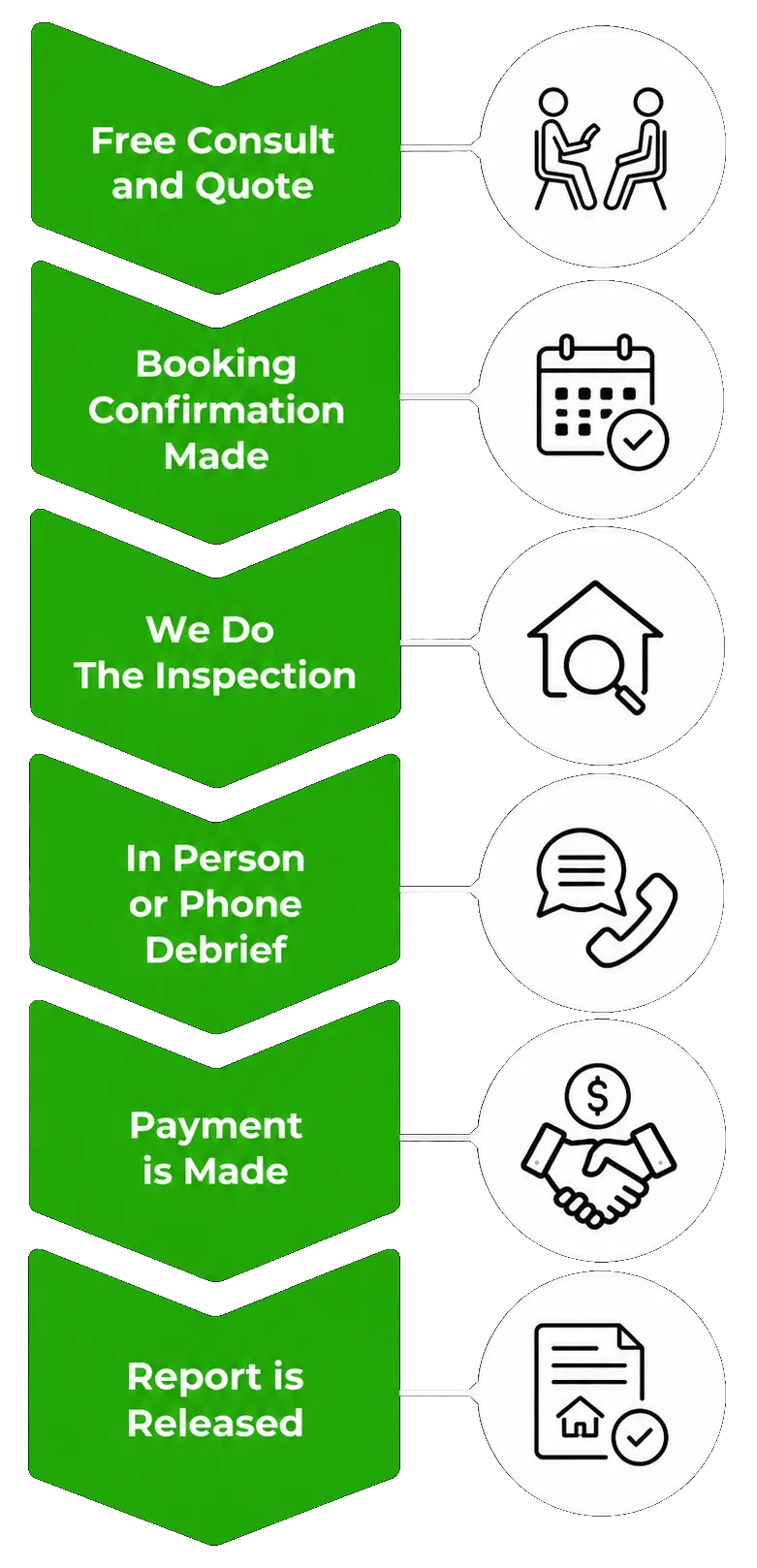
our process
Our process is simple and only contains a few simple steps

Frequently Asked Questions
When should I arrange a builder warranty inspection?
Arrange the inspection soon after you notice defects and before any contractual, QBCC or insurance deadline. Many owners also schedule one before their builder’s defect period ends. Check your contract and obtain current QBCC or legal advice because different defects may be subject to different processes and timeframes.
What documents should I provide to the inspector?
Provide the building contract, approved plans, specifications, variations, practical completion documents, previous defect lists and correspondence with the builder where available. These records help the inspector understand the agreed work and identify items that may need comparison with a particular document or selected finish.
Can the inspection report make the builder repair defects?
No. The report documents observed conditions but cannot direct the contractor or decide a dispute. Owners generally need to notify the builder in writing and allow a reasonable opportunity to inspect and rectify the work. The QBCC and your legal adviser can explain the available formal options.
What is the difference between structural and non-structural defects?
Structural defects can affect structural performance, occupant health or safety, functional use, or allow water penetration. Non-structural defects generally concern workmanship, finish or settling issues that do not meet the structural definition. Check the applicable definitions and deadlines against current QBCC guidance.
Can the inspector check repaired defects again?
Yes. A follow-up inspection can record the visible condition after the contractor completes repair work. It should focus on the agreed items and any accessible signs of continuing problems. Some repairs may still require certification, testing or assessment by an engineer or appropriately licensed trade.
READY TO take the next step?
get a free quote TODAY!
North Brisbane Property Inspections
0486 341 617