
SERVICES
Timber Pest Inspection
Inspection of accessible timber and risk conditions for homeowners, buyers, landlords and property managers.
What Is a Timber Pest Inspection?
A timber pest inspection examines accessible parts of a property for active termites, previous termite damage, wood borers and fungal decay. The inspector also records conditions that can increase the likelihood of attack, including excess moisture, poor ventilation, leaking pipes, timber touching soil and garden beds built against walls. Termites often travel through concealed areas and can damage framing before occupants notice a problem. A visual inspection cannot see through walls, but it can identify accessible activity, damage and warning signs that require further attention. Queensland’s warm climate allows termite colonies to remain active for much of the year, making regular assessment relevant across North Brisbane. The inspection also considers any visible termite management system and conditions that may reduce its effectiveness. A written report describes the findings, inspection limitations and recommended next steps. Treatment sits outside the inspection itself and must be completed by an appropriately licensed pest management provider.
Why Choose North Brisbane Property Inspections for Timber Pest Inspection
Attention to Conducive Conditions
The inspection looks beyond visible termite activity. It records moisture, drainage, ventilation, stored timber, landscaping and building details that may support future attack. Identifying these conditions gives property owners practical information about changes that could reduce risk, even when the inspection finds no evidence of an active termite infestation.
Accessible Timber Assessed Methodically
Roof spaces, subfloors, internal rooms, exterior timbers and surrounding site areas receive attention where access is safe. The inspector considers visible damage patterns, termite workings, fungal decay and wood borer evidence across the property rather than relying on a brief check of obvious external locations.
Timber Pest Findings Explained Clearly
The report separates active termite evidence, previous damage, timber decay, borer activity and conditions that may encourage future attack. Clear descriptions help clients understand whether they need pest treatment, building assessment, moisture repairs or ongoing monitoring. Clients can also ask follow-up questions about findings and inspection limitations.
Knowledge of North Brisbane Conditions
More than 30 years of experience across construction, housing maintenance and asset management supports the assessment of local properties. Slab-edge obstructions, damp subfloors, retaining walls, leaking wet areas and gardens against external walls can affect inspection access or timber pest risk. The service focuses on the conditions observed at each property.
What Timber Pest Inspection Covers
A timber pest inspection examines accessible timber and adjoining building areas for active termites, termite workings, previous damage, wood borer evidence and fungal decay. It commonly includes roof spaces, subfloors, internal rooms, external walls, decks, fences, landscaping edges and trees or stumps near the building. The inspector also records moisture and other conditions that may support timber pests. The report identifies access limitations and may recommend treatment, repairs, moisture investigation or further specialist assessment where the observed evidence requires additional work.
Signs You Need Timber Pest Inspection
Warning signs include mud-like leads on walls or foundations, hollow-sounding timber, blistered paint, sagging floors, damaged skirting, fine timber dust, small exit holes and timber that feels soft or crumbles. You may also notice damp subfloor soil, leaking showers, overflowing gutters or garden beds covering the slab edge. Flying termites around lights can indicate a nearby colony. Many infestations show no obvious signs, so property owners should not wait for visible damage before arranging a timber pest inspection.
DISCOVER WHAT OUR CUSTOMERS HAVE TO SAY ABOUT US
REVIEWS
REVIEW US ON GOOGLE
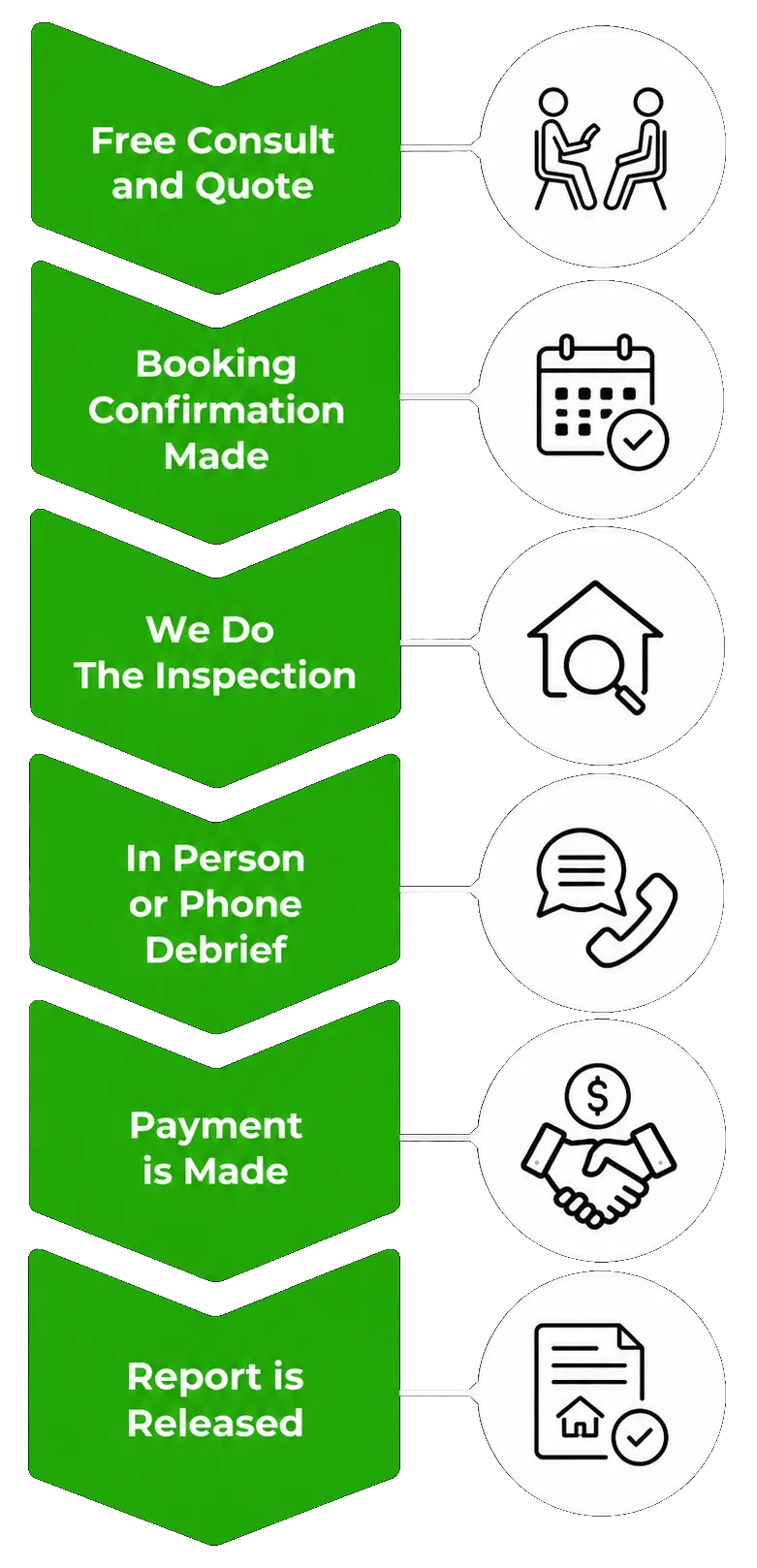
our process
Our process is simple and only contains a few simple steps

Frequently Asked Questions
Is a timber pest inspection the same as termite treatment?
No. An inspection identifies evidence, damage and conditions that may support timber pests. Treatment controls active termites or helps manage future risk. An appropriately licensed pest management provider should recommend treatment after considering the inspection findings, construction type and existing termite management measures.
Can termites be present without visible damage?
Yes. Termites often travel inside walls, floor systems and other concealed spaces. Occupants may see no surface damage until an infestation becomes advanced. A visual inspection can identify accessible evidence and warning signs, but it cannot confirm the condition of every concealed timber member.
How often should a property have a timber pest inspection?
Inspection frequency depends on the property’s construction, location, history and observed risk conditions. The inspector can recommend an interval after assessing the site. Properties with previous termite activity, moisture problems, restricted access or no visible management system may require more frequent inspections.
What should I do before the inspector arrives?
Provide safe access to the roof-space opening, subfloor entry, garage walls and external perimeter. Move stored items away from inspection points where practical. Share previous pest reports, treatment records and termite management notices so the inspector can consider the property’s known history.
Will the inspection find every termite colony?
No visual inspection can guarantee detection of every concealed colony. Wall linings, insulation, stored belongings and access restrictions can hide evidence. The report records these limitations and may recommend further investigation when moisture readings, damage patterns or other warning signs suggest activity in an inaccessible area.
READY TO take the next step?
get a free quote TODAY!
North Brisbane Property Inspections
0486 341 617